
Apoptosis Assay Kits for Cell Death and Cancer Research
Reliable detection of programmed cell death in life science and biomedical research
Apoptosis assay kits are laboratory tools used to measure programmed cell death (apoptosis) in biological samples. Apoptosis is a controlled biological process where cells systematically dismantle themselves without causing inflammation, playing a key role in development, immune response, and cancer progression.
These kits are widely used in cancer research, toxicology, and cell biology to understand how and why cells die.
What is apoptosis?
Apoptosis is a natural process of cellular self-destruction that helps maintain balance in living organisms.
Unlike uncontrolled cell death, apoptosis is:
- Highly regulated
- Energy-dependent
- Non-inflammatory
- Biochemically controlled
It is essential in:
- Removing damaged cells
- Preventing tumor formation
- Regulating immune responses
- Tissue development

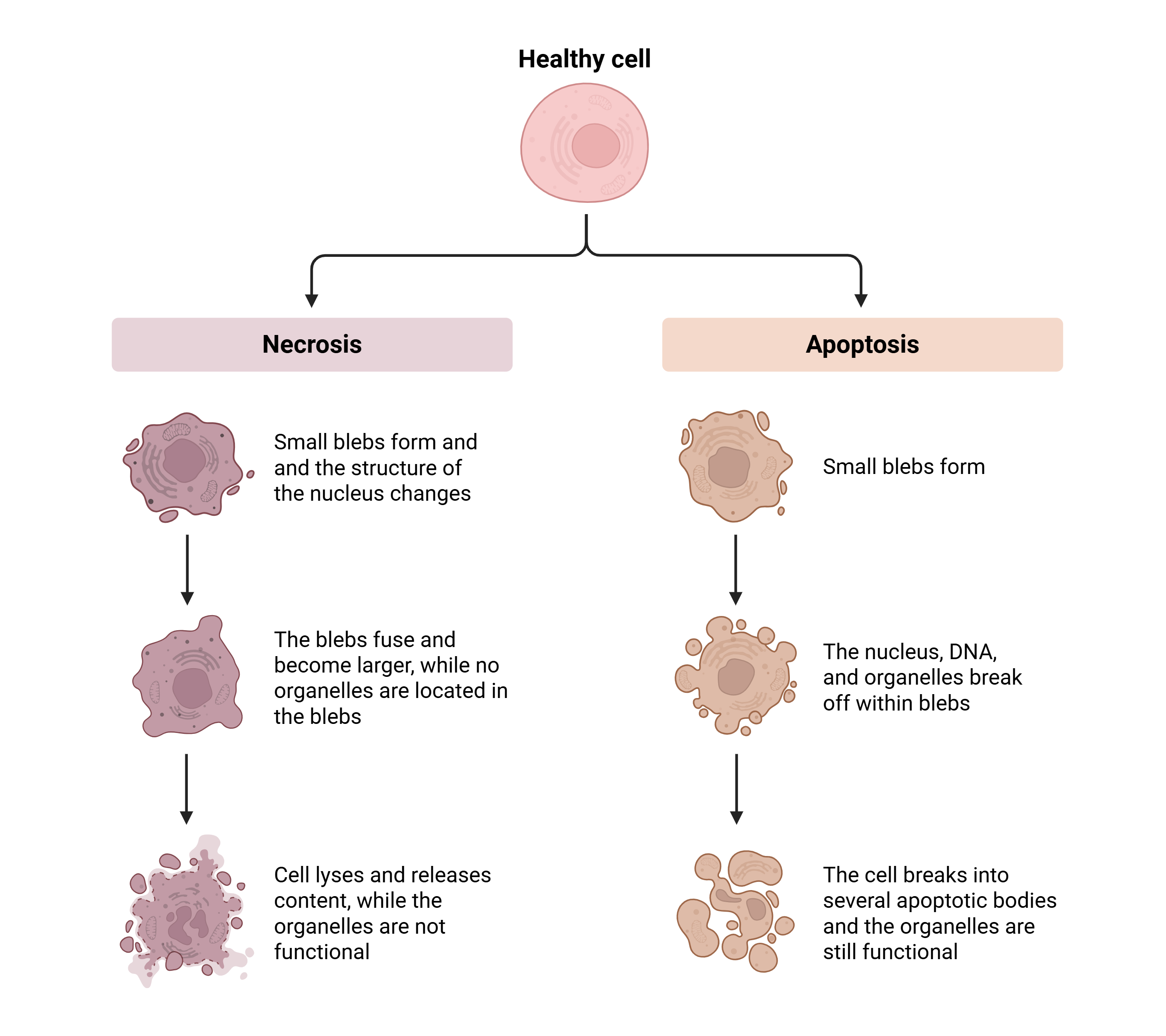
Apoptosis vs Necrosis
A key question in research is the difference between apoptosis and necrosis.
Process => Apoptosis : Controlled=> Necrosis : Uncontrolled
Inflammation=> Apoptosis : No => Necrosis : Yes
Energy use=> Apoptosis : Required => Necrosis : Not required
DNA fragmentation=> Apoptosis : Organized => Necrosis : Random
Cell membrane=> Apoptosis : Intact until late stage=> Necrosis : Rapid rupture
Understanding apoptosis vs necrosis is essential in cancer and toxicity studies.
What do apoptosis assay kits measure?
Apoptosis assay kits detect biological markers of cell death such as:
- Caspase activation (Caspase-3, -8, -9)
- Phosphatidylserine exposure (Annexin V binding)
- DNA fragmentation (TUNEL assay)
- Mitochondrial membrane potential loss
- Cell membrane integrity changes
These markers allow researchers to determine which stage of apoptosis is occurring.
Types of apoptosis assay kits
Caspase activity assay kits
Measure enzymatic activity of caspases, especially:
- Caspase-3 (executioner caspase)
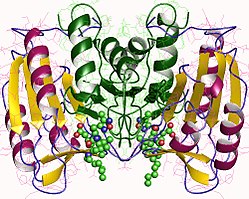
- Caspase-8 (extrinsic pathway)
- Caspase-9 (intrinsic pathway)

Annexin V apoptosis detection kits
Detect early apoptosis by binding phosphatidylserine on the outer membrane.
TUNEL assay kits
Detect DNA fragmentation, a late-stage apoptosis marker.
Mitochondrial membrane potential kits
Measure early mitochondrial dysfunction during apoptosis.
Multiparameter apoptosis kits
Combine multiple detection methods for higher accuracy.
Why apoptosis research is important in cancer ?
Apoptosis plays a central role in cancer biology.
Cancer cells often:
- Avoid apoptosis
- Suppress caspase activation
- Overexpress anti-apoptotic proteins like BCL2
This is why apoptosis assays are widely used in:
- Oncology dr ug testing
- Chemotherapy response studies
- Targeted therapy development
How apoptosis assay kits are used?
Typical workflow:
- Cell culture preparation
- Treatment with drug or compound
- Incubation period
- Staining or reagent addition
- Measurement using :
-
-
Flow cytometry
-
Fluorescence microscopy
-
Plate reader
-
-
Data interpretation
Choosing the right apoptosis assay kit
Choose based on your research goal:
- Early apoptosis → Annexin V kits
- Caspase activation → Caspase assay kits
- DNA fragmentation → TUNEL kits
- Full pathway analysis → Multiparameter kits
Applications
Apoptosis assay kits are used in:
- Cancer research
- Neurodegeneration studies
- Drug toxicity screening
- Immunology research
- Stem cell research
- Infectious disease studies
Frequently Asked Questions (FAQ)
What is apoptosis in simple terms?
=> Apoptosis is programmed cell death that helps the body remove damaged or unnecessary cells in a controlled way.
What is the difference between apoptosis and necrosis?
=> Apoptosis is controlled and non-inflammatory, while necrosis is uncontrolled and causes inflammation.
What is an apoptosis assay used for?
=> It is used to measure how and when cells undergo programmed cell death in research studies.
Why is apoptosis important in cancer?
=> Because cancer cells often avoid apoptosis, allowing them to grow uncontrollably.
What is the most common apoptosis marker?
=> Caspase-3 activation and Annexin V binding are among the most widely used markers.
Related research areas
- Caspase signaling pathways
- BCL2 family proteins
- Cell cycle regulation
- Mitochondrial apoptosis pathway
- Programmed cell death mechanisms
Health Gentaur Research Tools
Explore professional-grade apoptosis research kits, caspase assays, Annexin V detection systems, and DNA fragmentation tools designed for life science laboratories.