Explore the canal system in Sycon sponges from asconoid to leuconoid types with detailed structure, water flow mechanism, and functional importance in Porifera biology. Sponges (phylum Porifera) represent the earliest multicellular organisms, displaying a unique system of water circulation known as the canal system. Although simple in body design, their hydrodynamic canal architecture is one of nature’s most efficient models for filter feeding and gas exchange. The genus Sycon (also known as Scypha) is a marine sponge belonging to class Calcarea. Despite its microscopic size and simple morphology, its canal system shows an advanced adaptation that allows continuous water flow, nutrient absorption, and waste removal. What Is the Canal System in Sycon? The canal system is a network of pores, canals, and chambers through which water circulates in the sponge body. In Sycon, this structure is referred to as a syconoid canal system, representing an intermediate stage between the simpler asconoid and the more complex leuconoid types. Each system improves the efficiency of water circulation and food particle filtration. Main Components : For visualization, visit BioZoomer’s diagram The canal system evolves in complexity across Porifera. Understanding each type helps in comparative zoology and functional morphology studies. Found in Sycon Learn more on : The movement of water through the Sycon sponge follows a highly organized pathway that ensures maximum filtration efficiency. Water enters through numerous microscopic ostia present on the body surface. It then passes into the incurrent canals, which act as channels directing water toward the radial canals. Inside the radial canals, choanocytes generate water currents using their flagella. These specialized cells also trap food particles. The filtered water then exits through apopyles into the central spongocoel and finally leaves the body through the osculum. This unidirectional flow system ensures : Choanocytes, also known as collar cells, are the functional units of the canal system. They line the radial canals and are responsible for both water movement and feeding. Each choanocyte consists of: Functions include: This comparison highlights how structural modifications improve physiological efficiency in sponges. The syconoid organization represents an evolutionary advancement over the asconoid type. The folding of the body wall increases internal surface area, allowing more choanocytes to participate in filtration. Key advantages : Sycon sponges play an essential role in marine ecosystems. By filtering large volumes of water, they help maintain water clarity and nutrient balance. Ecological contributions include :Canal System in Sycon Sponge | Types, Diagram & Functions
The Simplicity and Complexity of Sponges
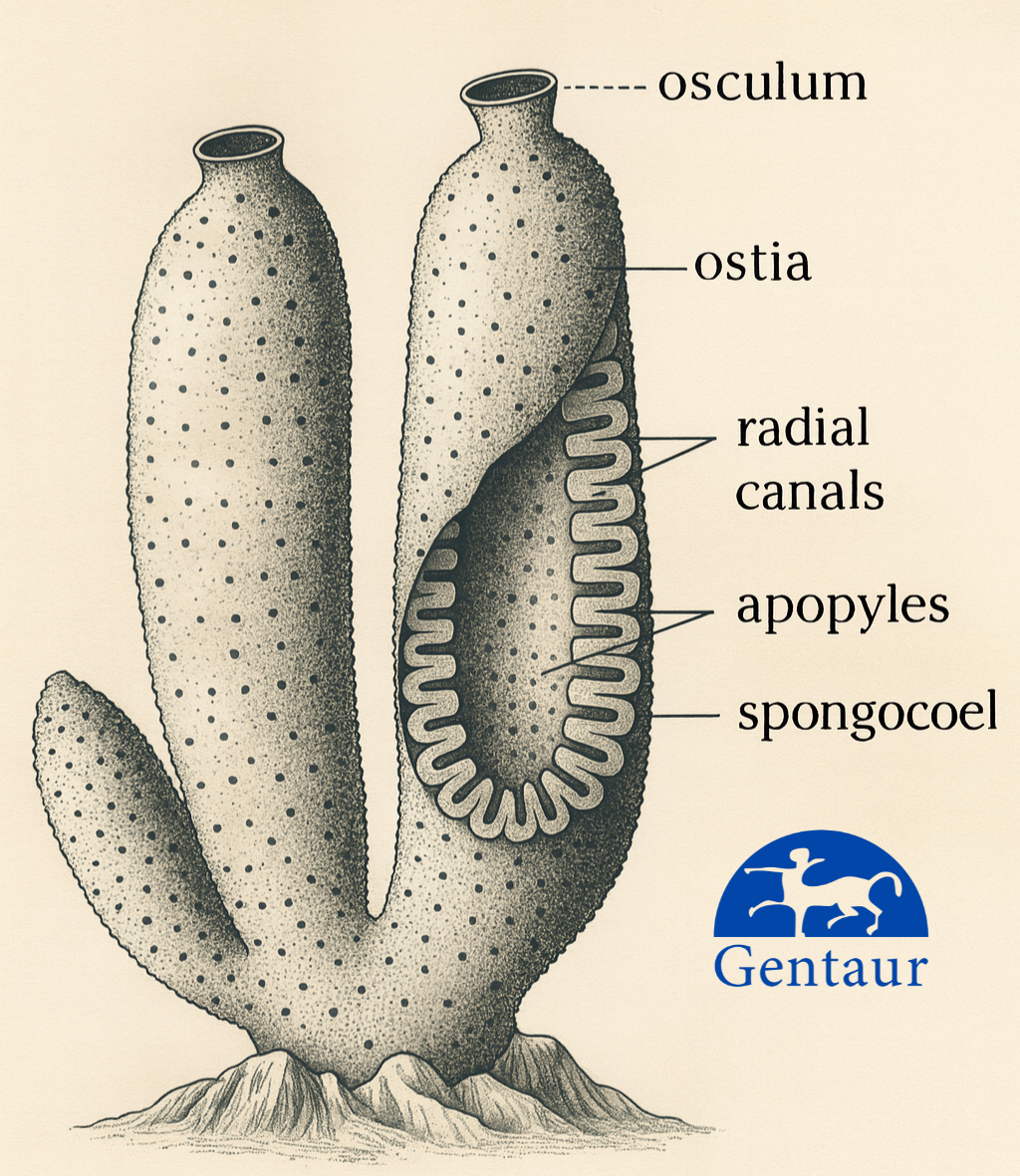
Types of Canal Systems in Sponges
Asconoid Type (Simplest Form)
Syconoid Type (Intermediate Complexity)
Leuconoid Type (Most Advanced)
Functional Significance of the Canal System
Diagrammatic Explanation of Water Flow in Sycon
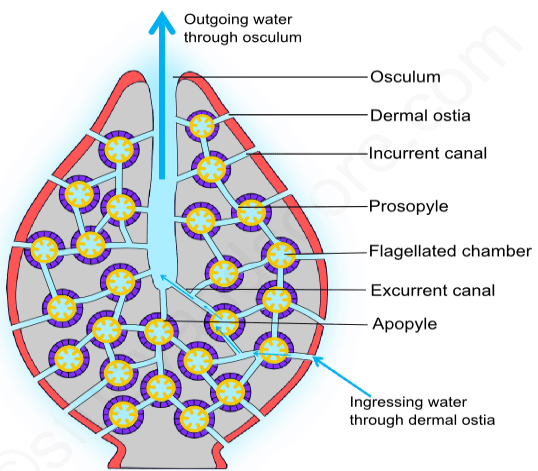
Role of Choanocytes in the Canal System
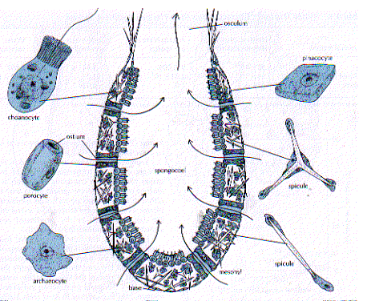
Comparison Table of Canal System Types
Feature
Asconoid
Syconoid
Leuconoid
Complexity
Simple
Moderate
Highly complex
Surface Area
Low
Increased
Maximum
Choanocyte Location
Spongocoel
Radial canals
Flagellated chambers
Efficiency
Low
Moderate
High
Example
Leucosolenia
Sycon (Scypha)
Euspongia
Adaptive Advantages of the Syconoid Canal System
Ecological Importance of Sycon Sponges
Interesting Facts About Sycon Sponge
